Acoustic Foam For Golf Simulators
Does acoustic foam work with golf simulators?
Acoustic foam absorbs mid and high frequencies which reduces:
- Ringing
- Flutter echo
- Slap-back reflections
- That sharp “warehouse” sound
If your goal is to control sound within your room, then acoustic foam will help for sure.

Where to place foam in a golf simulator room?
You do not need to cover every surface, but you do want to treat the loudest and most reflective areas.
Behind the impact screen
Installing foam behind the screen helps deaden the impact noise closer to the source.

Side walls
Side walls are often large, flat, reflective surfaces. Adding foam here helps eliminate echo, flutter echo, and excessive reverb. This makes the room feel quieter and more controlled.
Ceiling above the hitting area
The ceiling is one of the most overlooked surfaces. Sound from the club strike and impact reflects directly upward and back down. Treating the ceiling helps reduce that harsh bounce.
Bottom of the screen
Foam can also be used at the bottom of the impact screen to help catch and cushion balls as they fall. This reduces secondary impact noise and protects the surrounding structure.
Corner blocks work great for the bottoms of golf simulator screens!
How much foam do I need?
In most golf simulator rooms, treating 20 to 40 percent of the wall and ceiling surface area is usually enough to noticeably improve acoustics.
What type of foam works best for golf simulator rooms?
The best option is open-cell acoustic foam which is specifically designed to absorb sound energy.
Unlike closed-cell foam or padding materials, open-cell acoustic foam allows sound waves to enter the material and dissipate as heat through friction. This is what reduces echo and reverb inside the room.
Thickness matters
In general:
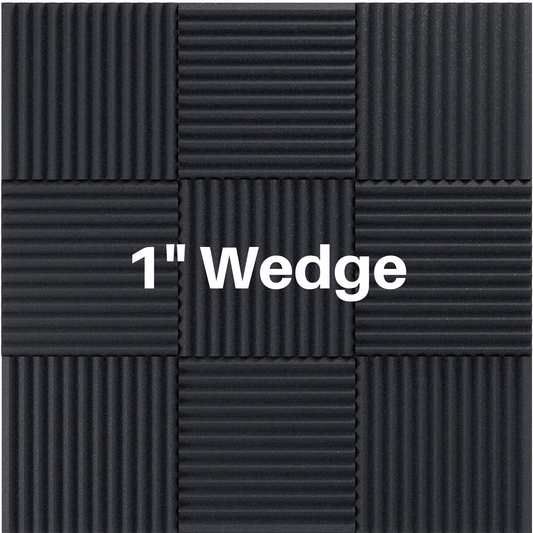
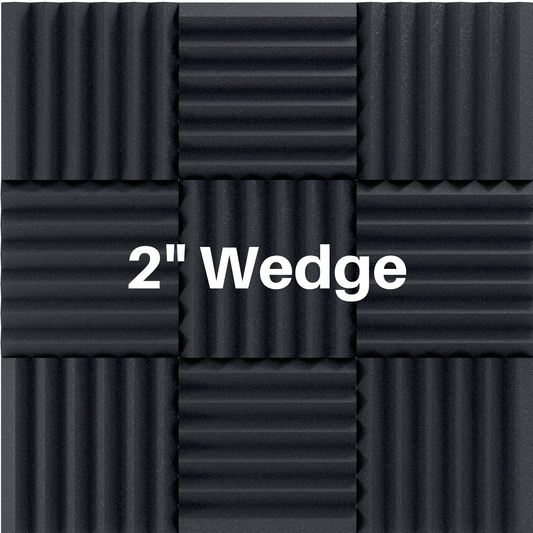
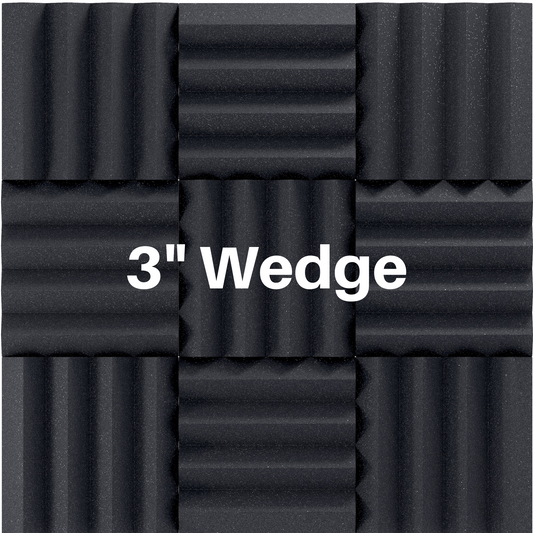
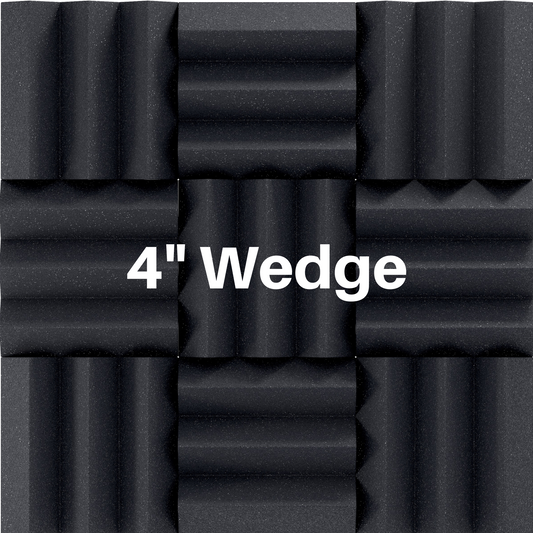
- 2-inch foam works well for echo control
- 3-inch to 4-inch foam provides better absorption, especially in lower mid frequencies
- Thicker foam absorbs more sound energy overall
Foam styles
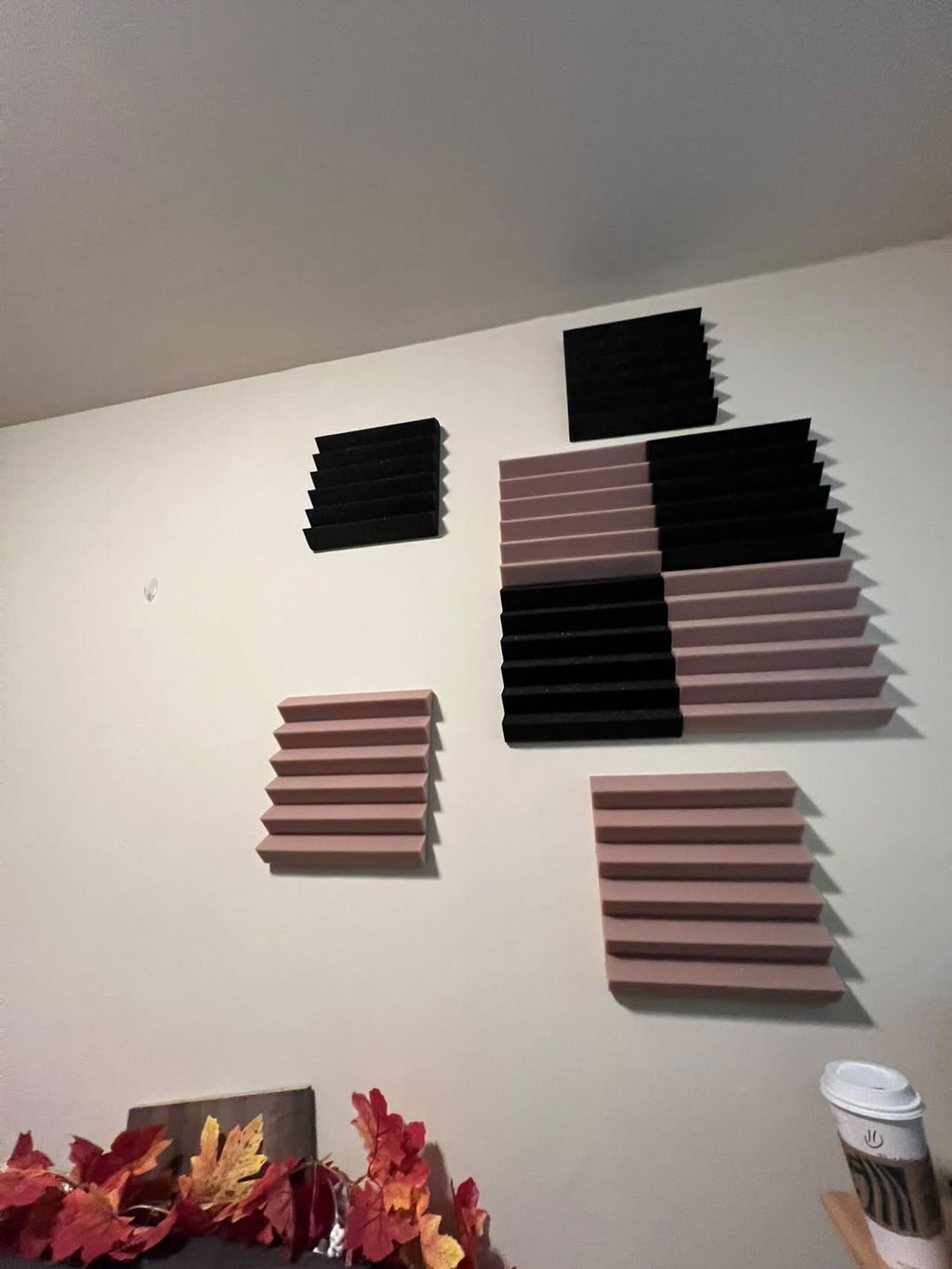
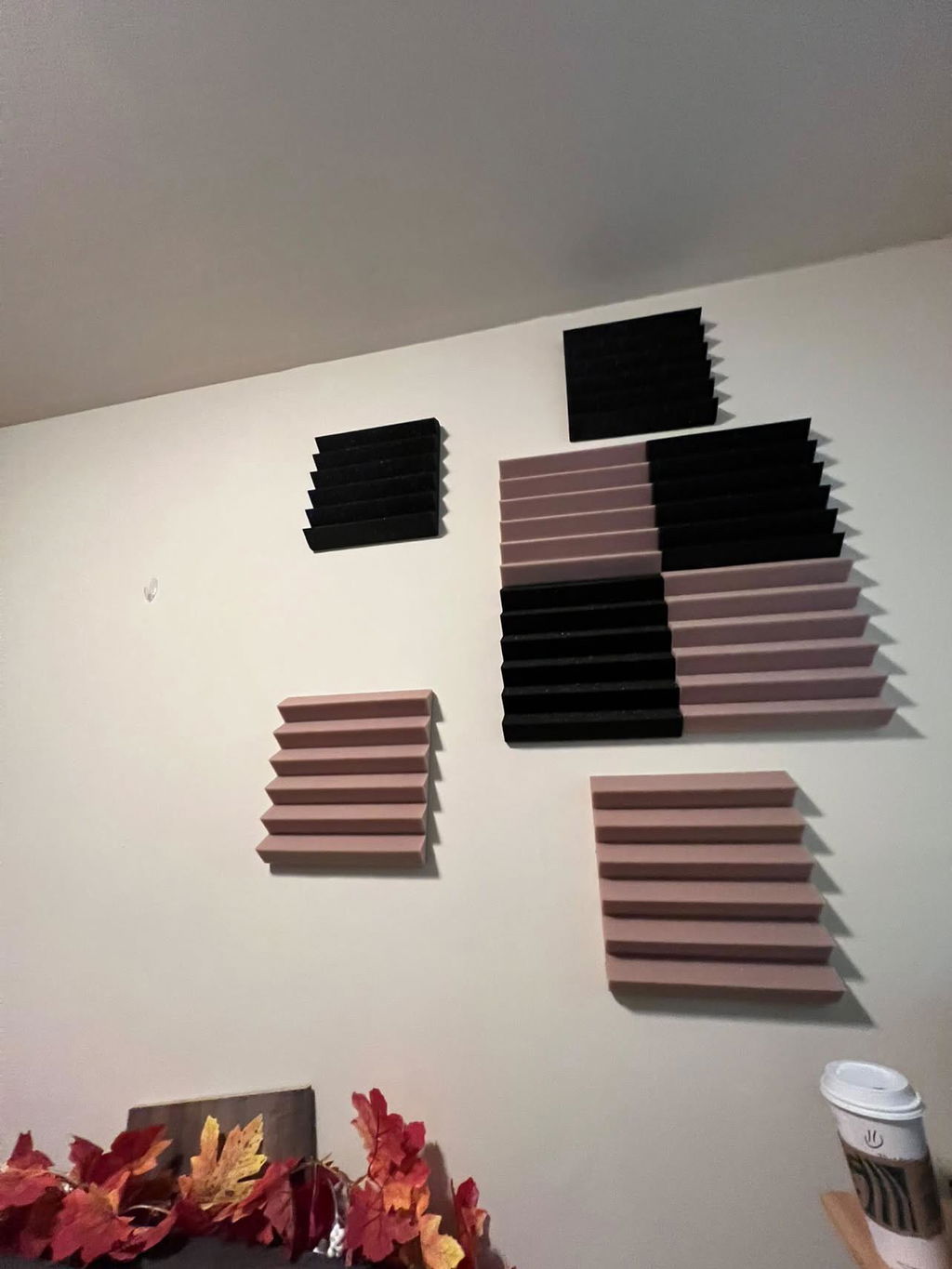
Customers have successfully used:
Really, any acoustic foam style would work as the face of the panels are mostly for aesthetic purposes. So whichever looks best to you will work.
Full line of acoustic foam!
Check out more acoustic foam panels and corner solutions!